
From My Notebooks In 1973: Cairo
14th December 2025 |
To my readers…
My quixotic notion to offer you an opportunity to reward me for the pleasure you have already enjoyed has provoked some interesting confusion.
A few seem to feel it’s almost immoral. “If I’d known I was going to be asked for money I would never have started reading your pieces in the first place.” Well, nobody actually said that, but I got the hint.
Then others thought I must be asking you to subscribe to a future book – I wasn’t – and refrained because they don’t think the book’s a good idea. Anyway, to those who simply thought it would be nice to give me something for past pleasure, thank you very much. I am quite comfortable with it. I believe I have earned it. And if I DO decide to make a book of it, the money will help. It was also a valuable experiment. It helped me to find out where I float in this ethosphere. Now, back to Cairo.
From My Notebooks In 1973: Egypt
[I’m desperately hoping to ride the bike up the Nile – such a vital, rich seedbed of humanity: Luxor and the Valley of the Kings. There’s a lull in the war. Why shouldn’t it be possible? In the meanwhile, I tried as best I could to understand Cairo. At about that same time it struck me that Islamic countries, from Morocco to Indonesia, spanned the globe, rather like a scimitar, and would be a mighty force if they could unite. I put this to a high-ranking journalist, Denis Hamilton, who happened to be staying at the Hilton at that time. He thought a minute and said, “No. The Shah would never allow it.” He meant, of course, the Shah of Iran. We know what happened to him.]
Cairo, 17th to 22nd November
Waiting for permission to ride to Aswan.
Daily round begins. Groppi’s for coffee, etc. Reuter’s office. The Press office at the Information Building, lunch, a game of chess and then anything to get the evening over with. At first, I think it will be just a day or two. My piece went off to London, together with a message, on Thursday. There was no reply, but the bureau lady has convinced me that because of my faulty slugging they may have got scrambled or delayed. So I repeat my message. [“Slug” was the word used to identify a piece of copy.]
Meanwhile at the press office Frau Amin treats me pleasantly enough and I am lulled by her comfortable conversation (which is quite genuine and kind.) although nobody thinks there is any possibility of my being given permission to drive to Aswan.
Meanwhile there are also the first set of papers from Benghazi to expect. And with Amin’s help at the hotel, I try to grapple with Libya and Arab Airlines, but they are too slippery for any of us. On Sunday I decide to cable Kerim for the waybill number, but the cables are subject to several days’ delay. The telephones however are working properly so I book a call for Monday morning. The days pass. I develop a powerful reputation for chess, dodge nimbly across the frontlines of affection between Amin and Alan and learn what I can from Faris Serafim. [Alan was a pale young Englishman with an upper-class accent staying at the Golden. Amin and I both thought he was probably a spy. Faris was Amin’s uncle who owned the hotel.]
Faris was at Oxford in 1919. I gather he read theology. He is, in any event, a Christian, i.e. a Copt, Egypt’s original tribe. He was contemporary with Nehru and, he suggests without naming them, many other luminaries. He recalls that they founded the International Club and toured Britain (Cardiff, Bradford) to speak in halls and churches about their respective countries. He considers there were some whose qualities were greater than, say, Nehru’s but rejected power when it was offered and contented themselves with being obscurely good.
He himself was from a family which had built a considerable position in Egypt. He talks of his great grandfather, who was “keeper” of the village in the reign of Mohamed Ali, and whose citizens hatched a plot to murder him rather than pay taxes. He escaped but the villagers claimed he had run off with their boxes, and a price was put on his head. He, however, made his way down the Nile and finally contrived a personal encounter with Ali when the guards were some way off.
“Surely you know,” said Ali, “that I have put a price on your head?”
“You can have it for nothing,” was the reply, “if you don’t believe my story.”
The upshot was that he promised to double the tax returns if he were allowed to found his own village, and he did so. This then became El Minya and the Serafims became very wealthy – sufficiently, according to Alan, to give a visiting Cardinal dinner for forty off gold plate. By the same source he is said to have been Egypt’s most prominent businessman, who was intimately concerned in and with the political structure of the country.
He knew Strawblow and the two men who helped him to the right hand of Durante and recounts that those two men soon found themselves in jail (this was, of course, on the American side in the 30’s).
[This strange final comment was meant to defer suspicion lest officials came to read my notes. Egypt was effectively a police state. “Strawblow’ was Sadat, “Durante” was Nasser. The words in parentheses were just rubbish.]
The revolution in Egypt stripped Serafim of his wealth, and his true worth is now demonstrated by the ease and dignity with which he assumes his position behind the desk of the Golden Hotel, one of the properties that remains in the family. Land and cash were nationalised. Buildings were merely heavily taxed.
His reflection on the Aswan Dam, on the need to mechanise farming, on the ability of Arab culture to survive the machine age (he says it will – I, as usual, remain pessimistic.)
Menu at Riche [a local restaurant]:
Dorma (stuffed cabbage & marrow) 18 piastres
Awa (Zeiad, Marbut) 4 ½ piastres
Soup/spaghetti 5 piastres
[One piastre was worth one British penny, or 2.5 cents US]
Robes are called Galabeia in Egypt, Shuka in Turkey, Djellaba in Morocco/ Algiers.
Walking on the crowded catwalk across Tahir Square in Cairo I noticed that though the crush looked impenetrable, when you walked in it there was always space allowed you – provided that you didn’t move at your own pace.
[Tahir Square was a huge intersection in Cairo. To enable pedestrians to cross it an equally huge catwalk crossed over it. Thousands of poor Egyptian workers, all dressed alike in blue galabeias, crowded over it.]
Cairo is the first city (I presume I shall see others) in which fate as much as mortar seems to fix the fabric. In Tunis the poorest seemed to have some sense of social movement, could dream and hustle a bit. Perhaps it’s so here, but the impression is different. Cairo is intensely populated. 6 million in a relatively small space. Many of these (I don’t know how many) are newly arrived from the farms and are as completely uneducated and unskilled in city ways as can be. It is they who root the city in its ways.
In Cairo I can fill my stomach twice a day for ten British pence, and this is in the heart of Cairo and going no further than 100 yards from the hotel. At the same distance is a cake and coffee house [Groppi’s] where a light breakfast of eggs, coffee, toast and marmalade involves the waiter in bringing eleven separate items – a glass of water, a glass containing cutlery and napkins, two heavy hotel silver jugs of coffee and hot milk, a cup and saucer, plate of toast, slab of white butter, a silver pot of marmalade, another of sugar, salt and pepper, and the eggs. The cup comes from the kitchen full of boiling water which is poured out at the last minute. It takes the waiter an appreciable time to unload the tray. The price is 28 pence, about the most a citizen of Cairo could be asked to pay anywhere in the city.
Anyone living here within grasp of Western standards is plainly able to enjoy the best that the city can offer, while the poorest are able to subsist on the crumbs he sprinkles in his wake – a penny for guarding his car, two pence for polishing his shoes, a penny for simply being somewhere regularly on the off-chance of a service to perform, and so on. There is little evidence of resentment on the one side, or contempt on the other. Once the donor has evolved his routine, and his small area of patronage becomes familiar, the relationship is warm and benevolent on both sides.
This mutual respect is fostered by the clear duty imposed on the Moslem by his religion to donate a distinct fraction of his wealth or income to others in need (I think 10%) The other duties are: to pray five times a day, to keep himself clean – particularly the ‘private parts,’ to do to others as he would be done by, and to visit Mecca once (if he can afford it). The stability of this system depends on a general belief that it is right, good and practicable. Morale and morality go hand in hand. Where external forces seem to strike at the viability of Arab society they are easily seen as a threat to every Arab’s self-respect, without which he cannot be satisfied with his place in society. I am sure that Arab dislike and contempt for Israel is rooted in the view that the Jews, whose ethical system compares so closely to the Arab system, have betrayed themselves and God for personal gain. Israel is perhaps the Trojan horse of the West.
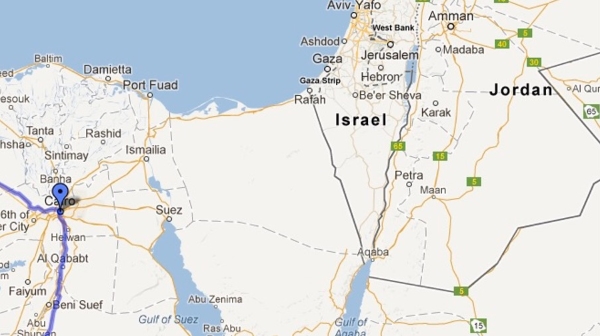
In the aftermath of the ’73 war, Cairo lives in a euphoria of vindication. Egyptians are convinced of a great victory. They have shown the world. Now they can negotiate honorably, and after a few weeks are ready to discuss their mistakes and weaknesses, to begin the process of dismantling their former idols. Other Arab countries who suffered defeat (the Syrians) or who could take no active part in the war (Libya, Saudi Arabia) are less willing to call it off. While Egyptians can joke about Quadaffi fighting to the last Egyptian, the Libyan feeling is that they too want their self-respect established in more dramatic terms. Thus the oil weapon is used not simply for its tactical value, but as a sword for Islam.
It now seems that a negotiated settlement is possible (no more) at considerable inconvenience to the West and given agonising re-appraisals by Israel. Such an outcome, now or later, presumably involves a general recognition that the Arabs are free to go it alone as a society united in its religion and ethical practice and financed by a realistic income from its resources. What then?
Mine is not a political reconnaissance. I have met no members of government, enjoyed no confidences from the wealthy or influential, but I will relate what happened among the people I did meet, experience always being more valuable than promises or advice.
Next week: Up the Nile without a paddle
It’s not too late to reward me for three years of wonderful story-telling with these notebook extracts, you can send me a one-time $100 subscription.